Diagnostic Monitors

Home » Products » High-Tech LCD Monitors » Diagnostic Monitors

Share this article:

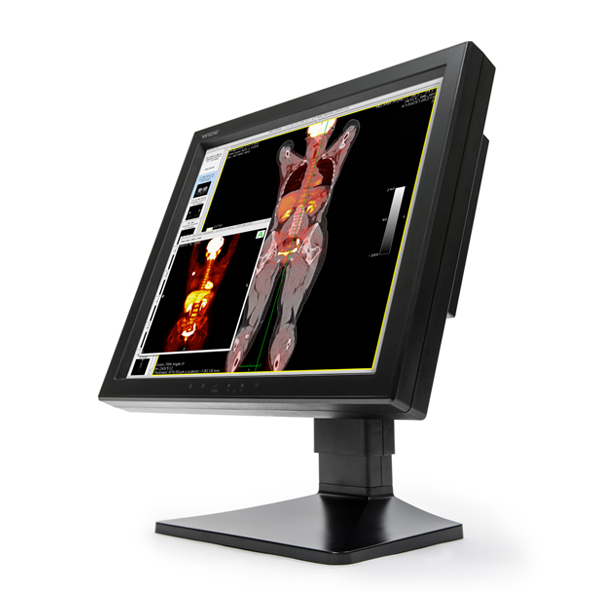
Diagnostic imaging demands absolute consistency: stable luminance, accurate grayscale rendering, and repeatable calibration so subtle findings don’t get lost. These diagnostic monitors are built around embedded sensing, uniformity control, and workflow-focused features (like reading lights and presence detection) to support long reading sessions and high-throughput environments.

Features

Diagnostic Monitors
Diagnostic Monitors

Diagnostic models in this family are designed to help maintain image quality over time with integrated sensors and calibration/QA support. For example, the CW120N (12MP) includes an embedded IQ sensor, ambient sensor, human detection, and self DICOM calibration/conformance features, plus task lighting options.

The Diagnostic lineup provides:

  • High precision grayscale rendering (e.g., 14-bit LUT / grayscale support on several models) for confident interpretation of fine detail.

  • Embedded sensing + stability controls (e.g., IQ sensor / SBC / ambient & human sensors depending on model) to help maintain target luminance performance.

  • Uniformity and ambient-response tools (e.g., LUC / DAC on certain diagnostic models) to support consistent viewing across the panel and conditions.

  • Workflow enhancements on flagship models (reading light, dual DP inputs, private menu screen, motion sensor) to reduce friction during long sessions.

  • Calibration & QA software support for DICOM GSDF and broader medical display QA activities.

About

How the technology works

These diagnostic monitors pair on-screen performance controls with measurement and calibration tools. A common approach described for this ecosystem is an Image Quality Assurance System that combines an embedded sensor, self-brightness control, and bundled DICOM calibration software to automate calibration and conformance tasks (including DICOM 3.14 calibration/conformance).

For deeper QA workflows, the calibration suite documentation describes support for calibration to NEMA DICOM Part 14 GSDF and verification/conformance activities aligned with multiple medical standards, along with reporting and scheduling/reminders.

Advantages and limitations

Advantages include tighter consistency across workstations, less manual drift management, and a more repeatable path to maintaining target display behavior over time (especially when QA schedules and reporting are used).

Limitations are mostly operational: achieving best results still depends on having a clear QA process (who runs tests, how often, and what thresholds trigger corrective action) and a workstation setup capable of driving very high resolutions where applicable.

Applications

  • Radiology reading rooms (multi-modality review)

  • Mammography / tomosynthesis workflows (where supported by model selection)

  • Any environment requiring repeatable DICOM-oriented calibration and monitor QA

Conclusion

Diagnostic monitors aren’t “just displays”—they’re part of an image-quality system. With embedded sensors, uniformity/ambient controls, and calibration + QA software support, this lineup is built to help teams keep performance consistent and auditable as workloads scale.


High-Tech LCD Monitors

Our products

Linecard

Leave a Reply

Your email address will not be published. Required fields are marked *